
Operations Turnaround: Improving Plant Throughput and Cost per Unit for a Food Processor
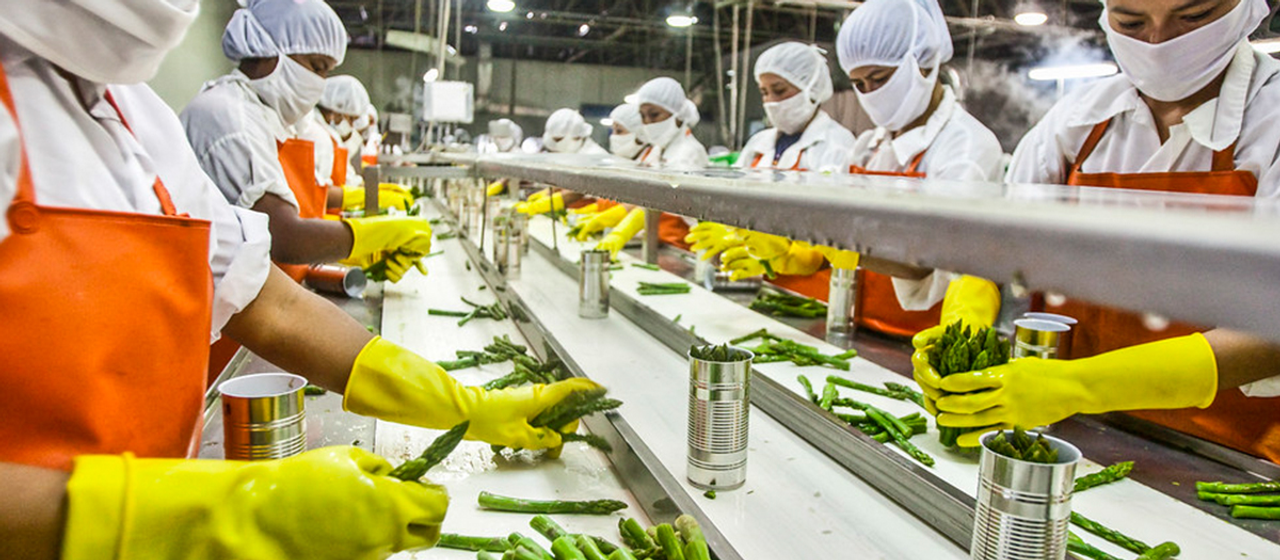
Background
The operator was planning a significant capital investment to expand capacity after repeatedly missing delivery commitments. Management believed the plant was running near its limit. Before committing capital, the leadership team wanted an independent view of whether the constraint was truly capacity, or something in how the plant was being run.
Objective
Assess true plant utilization, identify the main sources of lost throughput and avoidable cost, and determine how much additional output could be released from existing assets before any expansion decision.
Methodology
- Conducted a capacity and utilization audit across 4 production lines, measuring planned versus actual run time, changeovers, breakdowns and idle periods.
- Ran time-and-motion studies on key workflows including raw material handling, changeovers, packing and dispatch.
- Reviewed input, packaging, energy and labor costs per unit and compared them against internal best-performing shifts and external benchmarks.
- Assessed supplier lead times and raw material availability to identify upstream causes of stoppages.
- Modeled three scenarios (current state, process fixes only, fixes plus selective investment) to compare output, cost and payback.
Key Findings
- Actual utilization was approximately 58%, well below the level management assumed, with most losses coming from changeovers and unplanned stoppages.
- Output varied by 27% between the best and worst shifts on the same line, pointing to inconsistent practices rather than equipment limits.
- Raw material delays and inconsistent batching schedules caused a significant share of idle time.
- Packaging and dispatch were the true bottleneck for 6 of the plant’s highest-volume products, not primary processing.
- Process fixes alone could release a substantial share of the capacity the planned investment was meant to add.
Strategic Recommendations
- Standardize changeover procedures using the practices of the best-performing shifts.
- Introduce a production-scheduling and material-availability routine to reduce upstream stoppages.
- Prioritize targeted investment at the packaging and dispatch bottleneck instead of broad capacity expansion.
- Install shift-level tracking of utilization, downtime and cost per unit with weekly review.
Results & Impact
The operator deferred the full expansion, implemented the process and scheduling fixes, and targeted capital only at the identified bottleneck. Output increased by 22% and cost per unit fell by 11% within 6 months, with the avoided capital estimated at INR 18 crore.