
When One FMCG Recall Becomes a Market-Wide Risk
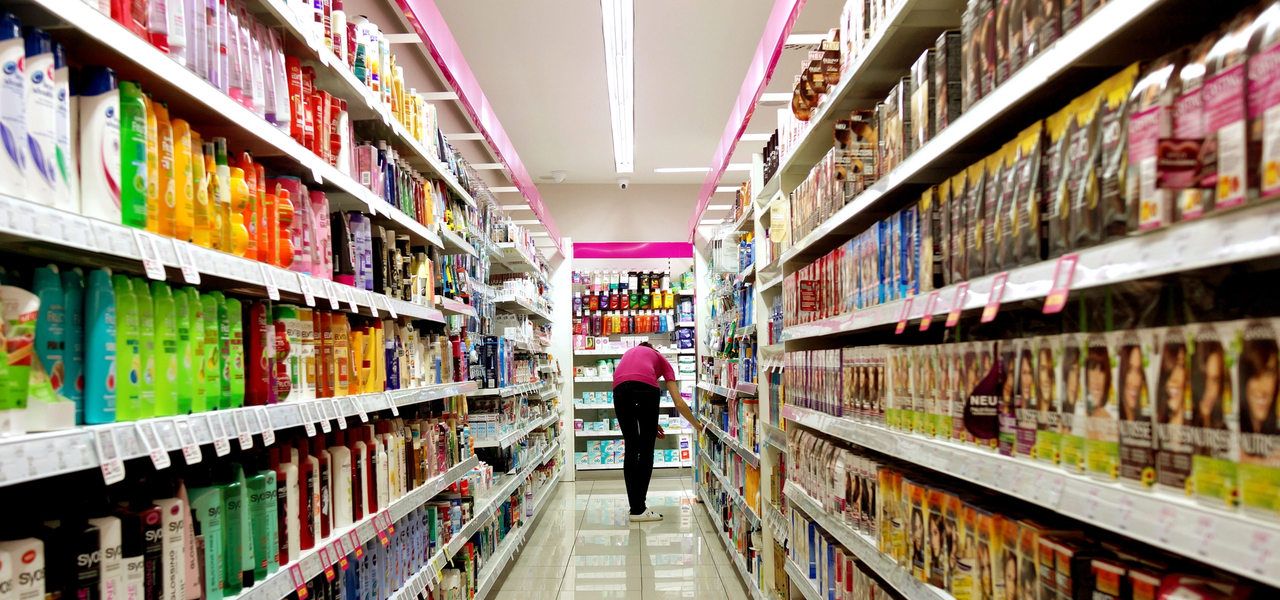
3 recent food recalls reveal a bigger challenge for FMCG leaders — the risk doesn't always stay inside one product.
A product recall is usually treated as a quality or food-safety event.
But for an FMCG company, the impact can travel much further — into consumer confidence, brand perception, retailer relationships, category dynamics, competitive positioning, product availability, and purchase behavior.
And sometimes, the original problem isn't even created by the brand whose product ends up recalled.
Recent developments across the U.S., UK, and Australia show how fast a food-safety issue can move through the FMCG ecosystem — and why the question FMCG leaders should be asking has changed.
It's no longer just:"Which product has been recalled?"
It's now:"What is changing in the market because of it?"
1. One Ingredient. Multiple FMCG Products.
In August 2026, Taylor Fresh Foods recalled multiple prepared food products containing jalapeños after its supplier flagged potential Salmonella contamination.
The affected products — salsa, guacamole, dips, and other ready-to-eat items — had been distributed across 26 U.S. states through major retailers including Kroger, Target, Trader Joe's, Walmart, and Whole Foods.
At first glance, this reads as a food-safety incident. But from a strategy lens, there's another layer:one contaminated ingredient can sit inside multiple SKUs, multiple product formats, and multiple retail channels at once— meaning commercial exposure can be far larger than the single product that triggered the investigation.
The hidden insight:SKU-level monitoring isn't enough when the same ingredient, formulation, or supplier dependency crosses product categories.
2. The Same Issue Can Travel Across Brands and Retailers
The jalapeño-related recalls didn't stop at one manufacturer. Whole Foods Market also recalled selected salsas, guacamole, pico de gallo, and prepared foods containing the affected jalapeños — sold across 12 U.S. states.
This creates a very different competitive environment. Picture two brands competing in the same category: one experiences a recall, the other stays on shelf. Suddenly the consumer's decision isn't driven only by price, taste, promotion, and loyalty — it's also shaped byavailability, trust, and perceived safety.
That can shift short-term category share. And if the perception shift becomes permanent, the impact outlasts the recall itself.
The hidden insight:A recall can temporarily rewrite the competitive rules of a category. Competitors shouldn't be asking"Did our product get recalled?"— they should be asking"How is consumer behaviour changing because another brand's product was recalled?"
3. Recalls Aren't Limited to Contamination
Food safety risk comes from more than one source. Lidl US recalled its Vitasia Asian Style Wok Spice Mix in August after routine quality testing flagged potential Salmonella. Separately, Australia's food recall system reported a brioche roll recall over undeclared milk and egg allergens — a reminder thatlabelling and allergen managementis just as real a risk driver.
FMCG risk is multi-dimensional. It can stem from:
- Contamination
- Undeclared allergens
- Labelling errors
- Foreign material
- Regulatory non-compliance
- Product formulation issues
Each type of incident triggers a different commercial response — which is exactly why a one-size-fits-all recall playbook falls short.
What FMCG Companies Should Be Watching
Treating a recall as purely an operational event is the biggest mistake FMCG leaders make. Five questions matter more:
1. Is consumer trust changing?Are consumers switching brands, searching for alternatives, or turning cautious about the whole category? Is the perception damage staying contained to one product — or spreading to the brand?
2. Are competitors gaining an advantage?When one product disappears from shelves, competitors can gain shelf visibility, consideration, trial, share, and retailer attention. A recall can quietly become someone else's opportunity.
3. Is the category itself changing?A serious recall can push consumers toward different formats, premium alternatives, private labels, fresh products, or simply away from the category altogether — temporarily or otherwise.
4. Which markets are becoming more attractive?If a recall hits one geography and not another, the competitive landscape shifts unevenly. Is there an opening to enter a market while competitors manage disruption elsewhere?
5. What happens after the headlines disappear?This is the question that matters most. The recall gets the attention — but the real commercial impact (switching, competitor gains, shifting perceptions, new launches, retailer decisions) plays out weeks or months later.
From Recall Monitoring to Market Intelligence
A recall is an event.The market response is the insight.
The real value comes from connecting the signals:
Recall / Regulatory Event → Consumer Reaction → Competitive Response → Category Movement → Channel & Market Impact → Strategic Decision
Instead of just knowing a competitor's product was recalled, the sharper questions are: What changed? Why? Who benefited? Which consumers changed behaviour? Which categories or markets are becoming more attractive? What should the business do next?
How Cap7tara Can Help FMCG Companies
At Cap7tara, we help FMCG businesses turn fragmented market information intoevidence-backed business decisions.
Consumer Intelligence— Understand changing consumer preferences, perceptions, and purchase behavior, and identify whether recall impact is temporary or a real shift.
Competitive Intelligence— Track competitor movements, launches, positioning, and category developments — because a competitor's disruption can be another player's opening.
Market Sizing— Quantify the opportunity when consumers move from one product format or category to another.
Market Entry— Reassess where growth opportunities exist as consumer behaviour, competitive intensity, and category dynamics shift.
Strategy— Connect market signals to real decisions around growth, competition, and market opportunity.
Trade & Execution— Translate how products, competitors, and demand are moving across channels into sharper trade decisions.
The Bigger FMCG Lesson
A product recall may start as a quality issue. But it can quickly become a consumer issue, a competitive issue, a category issue, a channel issue — and eventually, a strategic issue.
The companies that gain an advantage aren't necessarily the ones that react fastest to the recall notice.They're the ones that understand what happens in the market after the recall.
Because the biggest opportunity may not be in the recall itself — it may be in the market shift that follows.
Final Thought
The question shouldn't simply be"Was our product affected?"
The better question is:"What changed in our market because of this event?"
That's the difference between tracking information and using intelligence to make better decisions.
Is your FMCG business tracking market events — or understanding what they mean for your next move?
Connect with Cap7tara to explore how Consumer Intelligence, Competitive Intelligence, Market Sizing, Market Entry, and Strategy can turn market signals into actionable business decisions.